
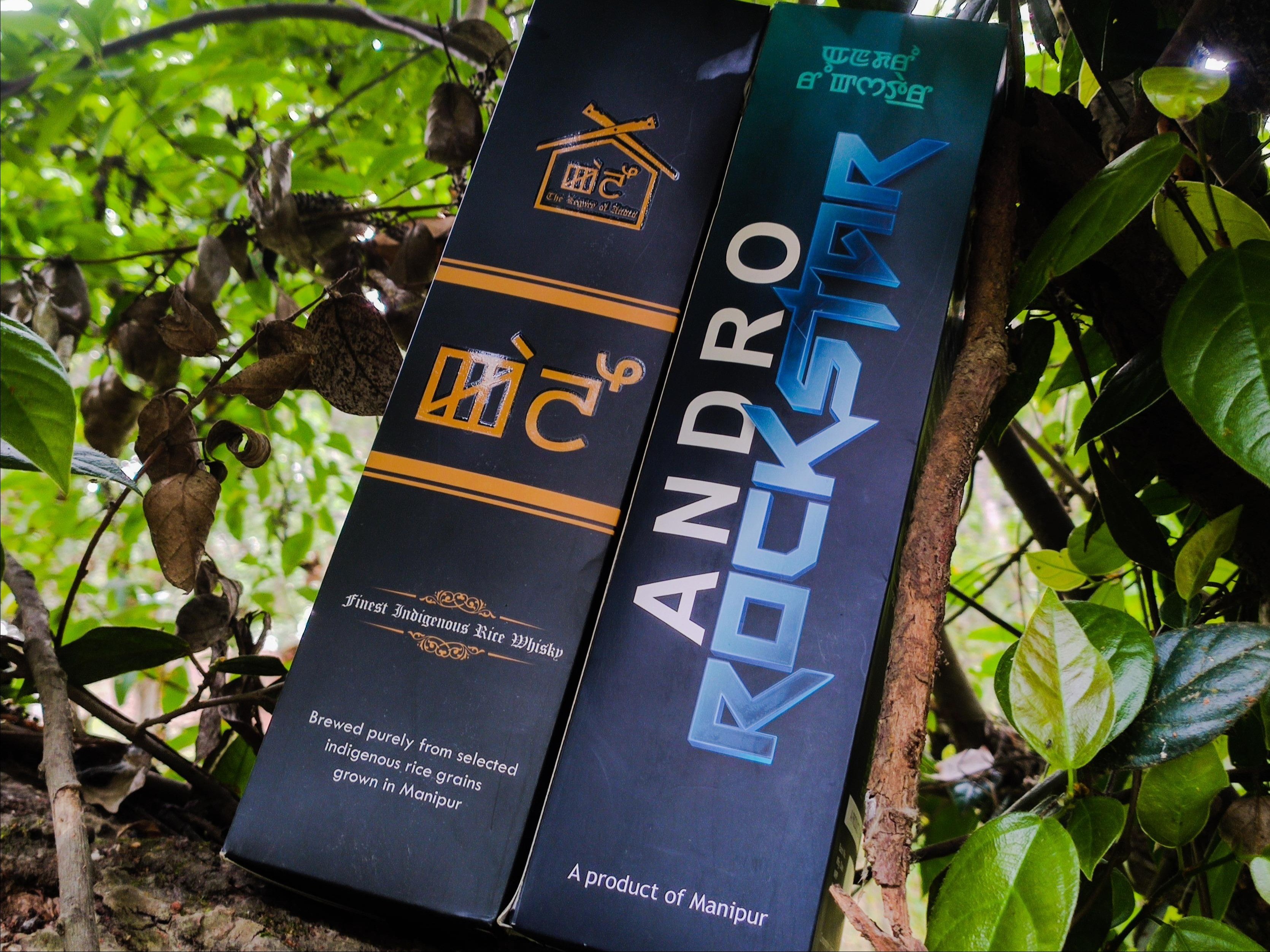
 Lukthel /
In the verdant hills of Manipur, where tradition intertwines with the fertile soil, there exists a spirit that captures the essence of the region—the indigenous elixir known as Yu. More than a drink, Yu is a cultural emblem, crafted through time-honored methods passed down through generations. Here's a glimpse into the art of preparing this local libation.
From time immemorial the people of Manipur use Yu for medicine, relaxant and offerings. It is a distilled product of the fermented local rice. The technology of the preparation of Yu is a traditional one and the product is a source of income generation to the poorer sections of people. The technology is amenable for upgradation in a scientific way. Yu is a strong solvent for many important active constituents of medicinal plants, whose actions play a potent role in the traditional medicine.
In the age-old pharmacopeia of Manipur, the art of healing finds its embodiment in Yu—a potent elixir intertwined with the wisdom of herbs and the alchemy of fermentation. Yu is also known as Kalei or Wanglei, all are Meetei language. This ancient tradition, passed down through generations, not only involves the meticulous crafting of the fermented spirit but also extends to the preparation of therapeutic decoctions.
The concoctions, born from the marriage of Yu and an array of herbs, including aromatic resins, have multifaceted applications. Administered either orally or as a soothing rubbing alcohol, these brews become remedies for a spectrum of ailments, echoing the holistic approach to health embedded in Manipuri culture.
At the heart of the fermentation process lies the enigmatic "Hamei," a critical component that imparts the distinctive character to Yu. Across the diverse landscapes of Andro, Sekmai, Phayeng, Jiribam, Bishnupur, Tengnoupal, and beyond, Hamei takes on different forms, influenced by local nuances. Although the ingredients remain consistent, the subtle variations in shape, size, and covering give each Hamei its unique identity.
The preparation of Hamei begins with a dance of rice—three kilograms soaking in water, drained, and left to air dry. This rice is then transformed into a fine powder, setting the stage for the brewing symphony. Meanwhile, the dried bark of Yangli, an herbal luminary (Albizia myriophylla or A. kalkora), is finely chopped or powdered, steeped in water, and carefully filtered to yield a brownish filtrate.
The essence of Yangli blends with the rice powder, a union kneaded into a paste and shaped into elliptical or rounded cakes—the Hamei. These Hamei creations rest over a hearth, maturing on a bed of paddy husk or straw, shielded by more straw and cloth. In this cocoon of warmth and darkness, transformation unfolds.
After four to five days, fine droplets grace the surface of the Hamei, signaling its readiness. A delicate dance of aromas fills the air—diacetyl, volatile phenols, and esters converge to create the intoxicating symphony that is Hamei.
This magical concoction serves as the heart and soul of Yu, infusing the spirit with notes reminiscent of absinthe's fennel, anise, and wormwood, the refreshing allure of crème de menthe through mint, and the subtle warmth akin to disaronno, courtesy of apricot kernel oil. Each drop of Yu becomes a journey through time and tradition, a sip of Manipur's rich cultural tapestry.
Ingredients
- Banana Leaves or Giant Taro Leaves or Teak Leaves
- White Rice
- Yangli (Albizia myriophylla or A. kalkora) - 250 - 300gchopped or powdered, steeped in water, and carefully filtered to yield a brownish filtrate.
Directions
1. Cook the Rice: Assuming the yangli is already prepared, Take an earthen pot of 15 to 20 Litre capacity. Wash and cook the 5 kg of white rice. Then spread the rice in a phoura or yangkok (A bamboo craft), keep in dim light.
2. The Fermentation: Mix the cooled rice with hamei (40-50 g per 1 kg of rice). The rice can be wash with clean water before the mixing. Clean and dry the earthen pot and fit the mixture into the pot. Cover the pot with clean cloth and keep in sunlight for 3-4 days for summer, 5-6 days for winter. Allow this mash to ferment naturally. The wild yeast present in the environment, or from the remnants of previous batches, initiates the fermentation, transforming sugars into alcohol.
Traditionally the mixture is fit into a bamboo basket internally wrap with the leaves of teak, banana, giant taro etc and backed in direct sunlight for 5-6 days after covering the basket with a cloth.
3. Distillation: The fermented mash is then carefully transferred into bamboo containers or earthen pots, setting the stage for the distillation process. The filtrate obtained from the fermentation with taste of sweet and bitter are called Atingba.
Distill the fermented liquid, capturing the essence of Yu. The distilled liquid undergoes a meticulous process, where the alcohol is separated from impurities, resulting in a clear and potent libation.
4. Maturation: The distilled Yu is left to mature in bamboo containers or earthen pots. This maturation period allows the flavors to develop, imparting unique characteristics to the final product.
The longer the maturation, the richer the flavor profile, showcasing the artistry involved in crafting this traditional spirit.
5. Celebration and Sharing: Once matured, Yu is ready to be savored. It is often shared during communal gatherings, celebrations, and significant events, becoming a symbol of togetherness and cultural pride.
Pour a glass of Yu, and let the warmth of Manipur's heritage infuse your senses. Whether enjoyed neat or shared among friends, each sip is a journey into the heart of Manipur.
Read more about Yu at Traditional alcoholic beverage, Yu of Meitei communities of Manipur.


Leave a Comment