
 Mathou Khangembam
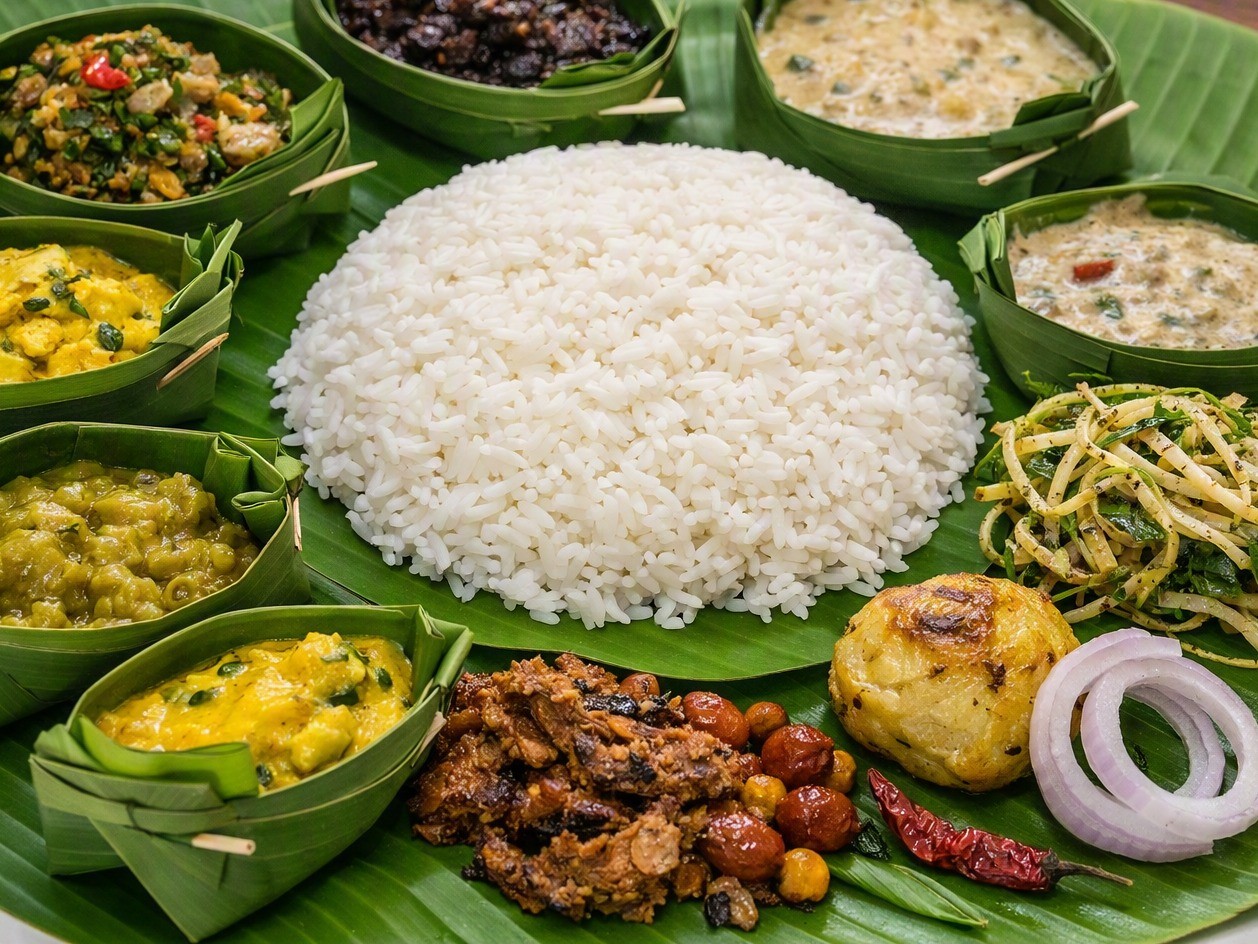
Food in Manipur is not just sustenance—it is ritual, memory, and community. Grand feasts such as Cheiraoba (New Year), Mangani Chakkouba, Ningol Chak Kouba, Luk Katpa, Chanou Tamba, and Leikai Chak Chanaba are woven into the cultural fabric, each marked by distinctive meals that carry symbolic meaning.
The Spirit of Manipuri Feasts
Every feast balances vegetarian and non‑vegetarian dishes, cooked in large quantities yet retaining authenticity. Meals are prepared communally, with elders guiding recipes and younger generations learning traditions.
Common Dishes Across Feasts
- Eromba – A fiery mash of boiled vegetables and fermented fish, seasoned with chilies. It is often the centerpiece, symbolizing resilience and simplicity.
- Uti Thongba – A mild vegetarian curry, compulsory in feasts, often cooked with peas or bamboo shoots. Its gentle flavor balances the stronger dishes.
- Nga Thongba – Fish curry simmered with local spices, representing abundance and the centrality of fish in Manipuri cuisine.
- Soibum Thongba – Tangy curry of fermented bamboo shoots, a dish that connects the feast to the land and its harvest.
- Singju – A refreshing salad of seasonal greens, herbs, and fermented fish, often served as a palate cleanser.
- Chamthong/Kangsoi – A light vegetable stew, balancing heavier curries with its simplicity.
Ngari‑based dishes – Fermented fish chutneys and stews, considered the soul of Manipuri cuisine.
Occasions and Their Culinary Notes
Cheiraoba (New Year)
Cheiraoba marks renewal. Families prepare offerings at gates and households, honoring gods of past, present, and future. Meals feature seasonal vegetables, fresh herbs, and symbolic dishes that represent prosperity. Read more here
Sample Menu: Chamfut, Eromba, Singju, Chamthong, Nga Thongba.
Anecdote: Families climb nearby hills after the feast, symbolizing aspirations for growth in the new year.
Mangani Chakkouba
This post‑marriage feast is a showcase of abundance and hospitality. Families prepare elaborate spreads to honor guests.
Sample Menu: Chamfut, Nga Thongba, Uti Thongba, Soibum Thongba, Eromba, Nga Taothong, Kheer, Hei Thongba, Singju, fried fish, sweets.
Anecdote: Guests recall the warmth of hospitality, with elders blessing the couple through shared meals.
Ningol Chak Kouba
This feast is a brother‑sister celebration, observed on the second day of the Manipuri lunar month of Hiyangei. Sisters invite their brothers to their homes, preparing lavish meals as a gesture of love, respect, and familial bonding. It is both a ritual of kinship and a showcase of abundance, where food becomes the medium of blessing and affection. Read more here
Sample Menu: Chamfut, Nga Thongba, Yen Thongba, Uti Thongba, Eromba, Singju, fried fish, sweets.
Anecdote: Guests recall the warmth of hospitality, with sisters serving meals to their brothers, while elders bless the siblings for long life and prosperity. The feast often ends with laughter and storytelling, reinforcing the sacred bond of family through shared dishes.
Chanou Tamba
Celebrations of milestones, Chanou Tamba is marked with newly cropped vegetables, grains, and foods offered to the community deity Umang Lai in every villages. The feast is celebrated at the sacred place of the deity, blending agriculture, spirituality, and community.
Sample Menu: Fresh rice, tender bamboo shoots, leafy greens, Eromba, Singju, Chamthong, Nga Thongba.
Anecdote: Villagers gather at the Umang Lai shrine, offering first harvests before sharing meals together.
Luk Katpa
These feasts are offerings to the elders’ souls (ancestors) by the family. Meals are deeply spiritual, connecting the living with the departed.
Sample Menu: Chamfut, Sagol Hawai Thongba, Soibum Thongba, Nga Thongba, Nga Taothong, Uti Thongba, Eromba, rice beer (in some traditions).
Anecdote: Families gather around hearths, cooking slowly and recalling stories of ancestors.
Leikai Chak Chanaba
Neighborhood feasts strengthen bonds among families. Meals are communal, with each household contributing a dish.
Sample Menu: Chamfut, Singju, Chamthong, fried fish, sweets, Eromba, Nga Thongba, Uti Thongba.
Anecdote: The feast is less ritualistic and more about unity, laughter, and shared joy.
Why These Meals Endure
These dishes endure because they embody simplicity, respect for nature, and communal joy. They are not just meals—they are rituals of remembrance, renewal, and togetherness. Cooking notes emphasize balance: fiery Eromba alongside mild Uti Thongba, rich Nga Thongba paired with light Chamthong.
Equally important is the spiritual dimension. In Manipuri tradition, every village has its own Umang Lai, meaning God of the Forest or Guardian of the Forest. Each deity carries a distinct name and identity, serving as protector of the land and community. Offerings during feasts—whether at Chanou Tamba or Cheiraoba—are often dedicated to these forest guardians, symbolizing harmony between people and nature. The meals thus become more than food: they are acts of devotion, gratitude, and acknowledgment of the sacred bond between humans and their environment.
Cultural anecdotes highlight how food becomes memory: elders recalling past feasts, children learning recipes, families offering dishes to deities or ancestors. Each feast is a living archive of Manipuri identity, where the Umang Lai stands as a reminder that the forest and its guardians are inseparable from daily life and celebrations.


Leave a Comment