
 Lukthel /
Introduction
In Manipuri cuisine, mushrooms—locally termed Chenggum—are more than just a seasonal ingredient; they are a celebrated culinary treasure. From the rustic, deep-forest aroma of wild varieties to the clean, versatile flavors of modern cultivated crops, mushrooms form the backbone of iconic dishes like Chengum Thongba (savory stew), Eromba (mashed spicy chutney), and Paknam (baked savory cakes).
Availability and Seasons
The availability of mushrooms in Manipur splits cleanly between wild foraging and artificial cultivation:
- Wild Foraging Season: May to September. The onset of the pre-monsoon showers and the peak rainy season trigger the mass flushing of indigenous wild mushrooms across hills and valleys.
- Cultivated Availability: Year-round. Advanced domestic farming environments ensure that popular everyday varieties are constantly supplied to markets like the Ima Keithel.
Edible Mushroom Varieties and Local Names
Manipur boasts an incredible diversity of indigenous fleshy fungi. The most prominent edible varieties include:
- Narin Chenggum (Termitomyces eurrhizus): Highly prized, fleshy, and umbrella-shaped wild mushroom. It features a prominent taproot-like structure.
- Uyen (Lentinula species): A local wild relative of the Shiitake mushroom family. It is widely celebrated for its intense, earthy, and robust umami profile.
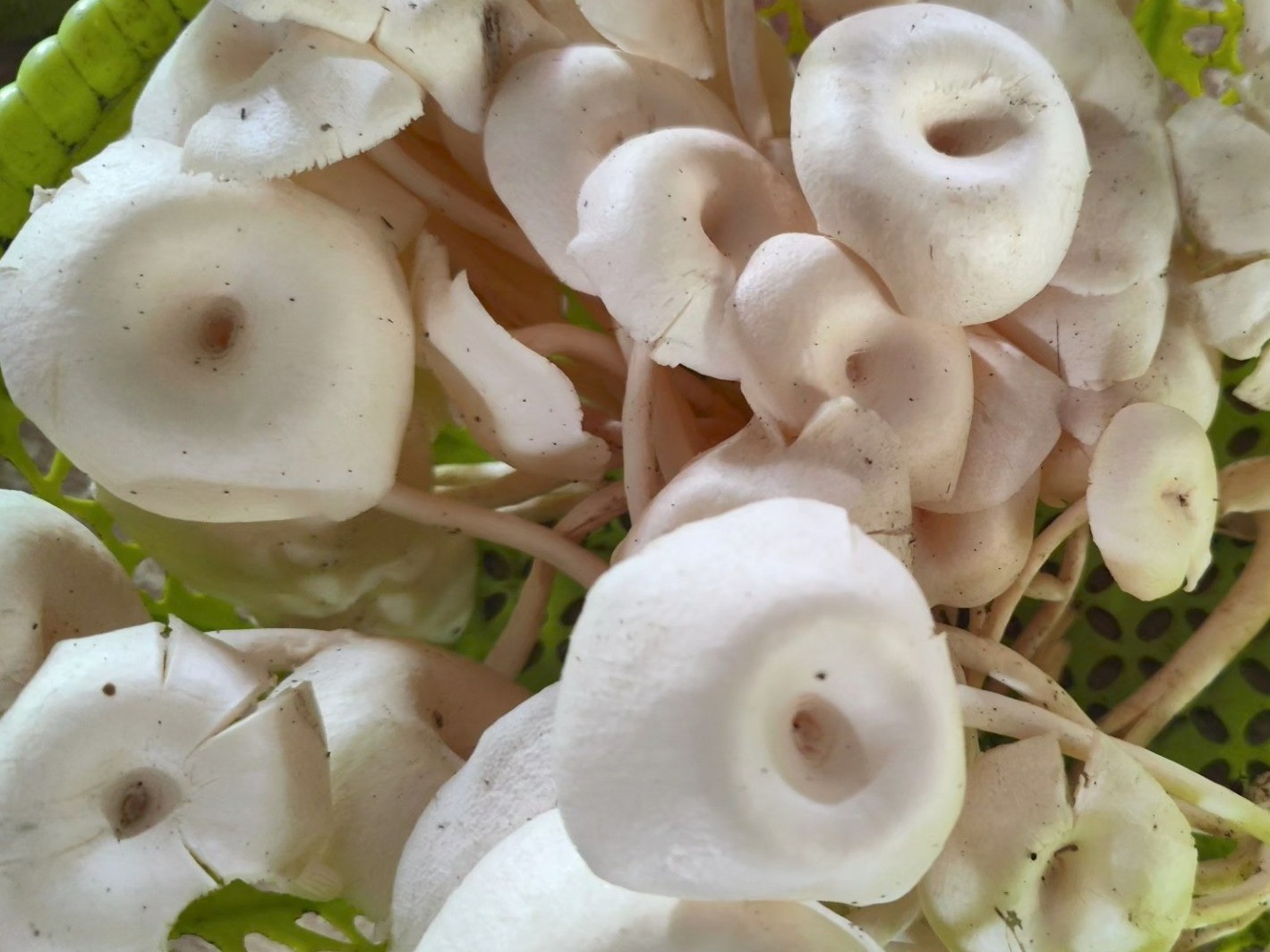
- Thangji-Uyen (Tricholoma giganteum): A large, fleshy, and highly sought-after white mushroom found growing in clusters.
- Kanglayen (Schizophyllum commune): Also known as the split-gill mushroom. It grows predominantly in small, fan-shaped, leathery ruffles on decaying logs. It is routinely sun-dried and preserved for off-season use.
- Charuyen (Volvariella volvacea): Commonly referred to as the paddy straw mushroom. It is easily recognized by its initial egg-like veil stage.
Natural Habitat: How and Where They Grow
Wild Chengum species depend heavily on delicate forest ecosystems and symbioses:
- Termite Mounds: Narin Chenggum grows strictly in a mutualistic relationship with subterranean termite nests. The fungal mycelium breaks down organic matter inside the termite comb.
- Decaying Timber: Kanglayen and Uyen thrive saprophytropically on dead, fallen, or scorched tree logs in humid, shady forest slopes across districts like Ukhrul, Senapati, and Tamenglong.
- Agricultural Residue: Varieties like Charuyen sprout naturally in agricultural lowlands on decaying piles of left-over paddy straw after the harvest season.
Artificial Farming in Manipur
To combat deforestation and supply the market sustainably, mushroom cultivation has expanded rapidly in Manipur:
- Oyster Mushrooms (Pleurotus ostreatus / Local Cultivated Chenggum): The most widely farmed variety due to its low cost and high yield. It is cultivated indoors using sterilized paddy straw or Uningthou sawdust packed tightly into cylindrical plastic bags.
- Incubation & Fruiting: Substrates are inoculated with mushroom "spawn" (mycelium). They are kept dark until colonized, then exposed to fresh air and humidity to trigger rapid pinning and harvesting.
Health and Nutritional Benefits
Manipuri mushrooms are a powerhouse of dense nutrition, offering structural dietary support particularly to low-income families:
- High-Quality Protein: Essential for muscle health, dry mushrooms contain up to 30–40% digestible protein, comprising all vital amino acids.
- Micronutrient Density: Exceptionally rich in dietary Iron, Potassium, and Zinc, which directly combat mineral deficiencies in women and children.
- Medicinal Properties: Regular consumption provides natural antioxidants, aids in lowering cholesterol, supports immune-system modulation, and contains compounds linked to anti-cancer properties.
A Crucial Culinary Note on Foraging Safety
When preparing wild mushrooms for your recipe, emphasize traditional food safety. Indigenous cooks always combine wild Chenggum with turmeric powder, fresh ginger, or Ngari (fermented fish). These ingredients act as traditional indicators and natural biochemical mitigators against minor localized toxins, preventing accidental spoilage or food poisoning during preparation.


Leave a Comment