
 Lukthel /
When global food enthusiasts think of fermented fish in Manipuri cuisine, Ngari is usually the first name that comes to mind. Yet, quietly tucked away in the traditional kitchens of the Meitei community lies a far more ancient, highly indigenous culinary marvel: Hentak.
Unlike commercial fish products, Hentak is a hyper-local, artisanally crafted paste that bridges the gap among nutrition, ancient food-preservation science, and sacred cultural rituals. It is more than a condiment; it is a living artifact of the history of Kangleipak (ancient Manipur).
The Myth and Folklore: Hanubi Hentak
Hentak is so deeply woven into the local fabric that it holds a prominent place in ancient Meetei folklore. A famous traditional folktale, Hanuba Hanubi Paan Thaaba (The Old Man and Old Woman Planting Colocasia), is popularly referred to in households as Hanubi Hentak! Hanubi Hentak!. This rural, humorous story involving an elderly couple, a troupe of mischievous monkeys, and a taro-cooking disaster highlights just how long taro (Paan/Hongu) and Hentak have co-existed in the agrarian memory of Manipur.
In the story, the old man, Hanuba, mistakenly eats a piece of raw taro (Paan/Hongu), thinking that it has already been thoroughly boiled. The moment he bites into it, the raw juices hit his tongue, and an agonizing, intense itching and burning sensation takes over his mouth and throat. Unable to speak properly and panicking from the pain, Hanuba starts screaming desperately to his wife: "Hanubi, Hentak! Hanubi, Hentak!"
Furthermore, oral history in regions like Andro suggests historical spiritual ties. Local lore states that the sacred wooden pounding tool (Misi Sumbal) was inaugurated by Lord Naran Panganba, and first used by a Chakpa Andro Priestess (Hanu Langmai Amaibi) to pound the very first batches of Hentak.
Why Hanubi Hentak in the Folklore? The Magical Antidote
The reason Hanuba screams so frantically for Hentak is due to its seemingly magical ability to reverse the painful side effects of the raw plant. In the wild, raw aroid plants are notoriously acrid; if the raw juices touch your mouth or throat, it triggers a severe, agonizing itching that can last miserably for hours. Yet, in a brilliant twist of ancestral knowledge, eating a small spoonful of fermented Hentak acts as an immediate cure. Taking Hentak will neutralize the severe throat irritation and completely stop the stinging within just a few minutes. In the context of the folklore, Hentak isn't just a side dish—it is the ultimate, life-saving household antidote that Hanuba desperately needed to save his throat.
The Genius Science: Taming the Needle-Like Hongu
The brilliant culinary science behind Hentak lies in how it safely processes the Hongu plant. Raw Alocasia contains microscopic, needle-shaped crystals of calcium oxalate. If eaten raw or improperly cooked, these crystals cause severe stinging, itching, and swelling in the throat.
Ancient Manipuris solved this through a two-step biochemical hack:
- Mechanical Pounding: Sun-dried fish and aroid petioles are thoroughly pounded together in a wooden mortar and pestle. This physical grinding breaks down the sharp structural integrity of the calcium oxalate crystals.
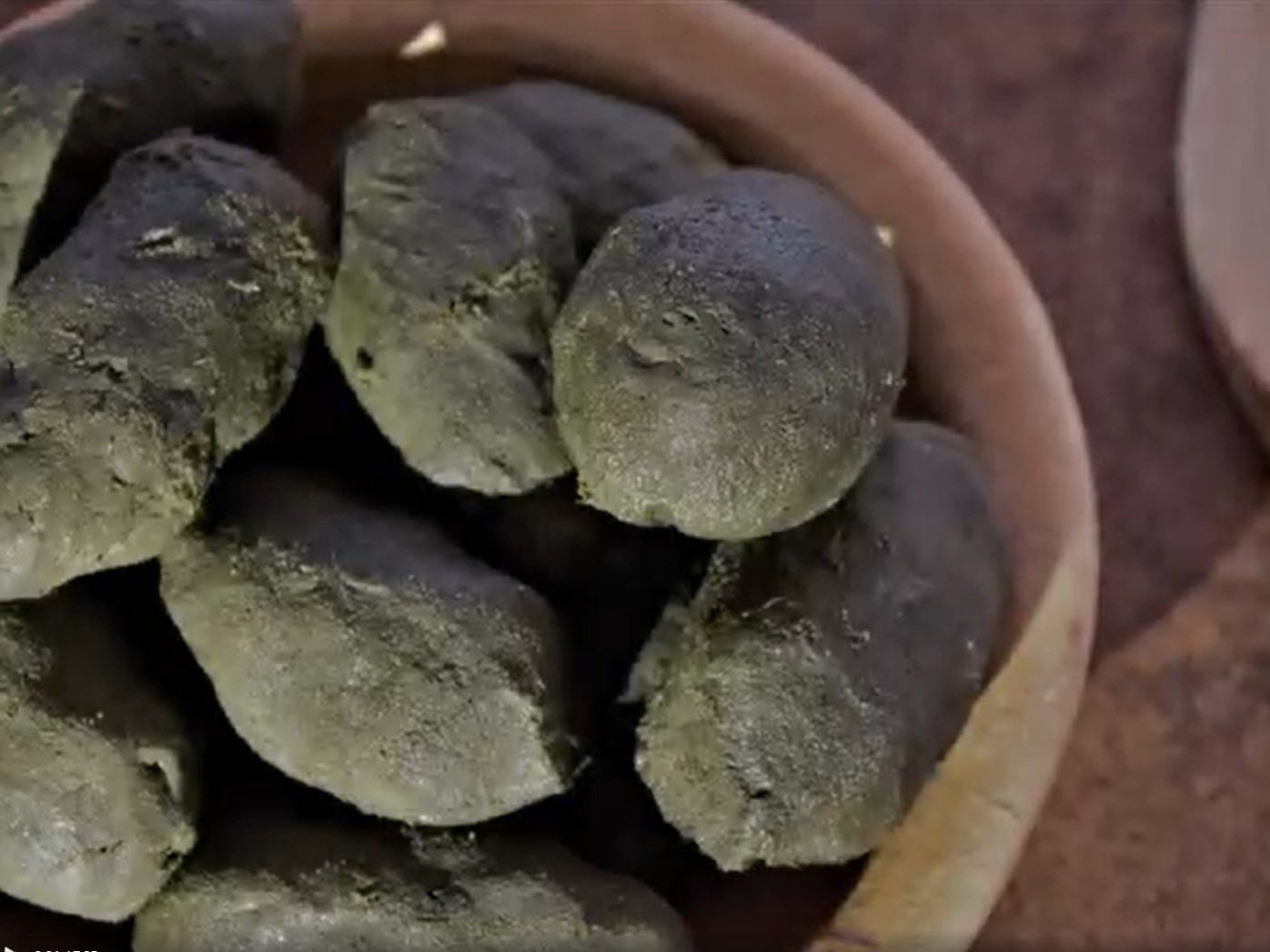
- Anaerobic Fermentation: The mixture is shaped into small balls and packed tightly into small, airtight earthen pots (Chapkan) for a week to a month. Lactic acid bacteria (such as Lactobacillus) thrive in this oxygen-free environment, lowering the pH level. This natural acidity completely neutralizes any remaining acridity or itchiness from the plant while preserving the paste for months.
During this process, the tough bones of the tiny fish soften and dissolve into the paste, drastically increasing the bioavailability of calcium, phosphorus, and essential proteins. Read The traditional fermented foods of meiteis of Manipur, India: A case study by Helen Soibam and Victor Singh Ayam and other journals for more information.
The Sacred Ritual of Preparation
Historically, Hentak is a domestic art passed down through the matriarchs of the family. In traditional settings, it is treated with immense reverence:
- Purity Rituals: Women typically prepare Hentak only after taking a bath, wearing fresh, clean clothes, and covering their heads—ensuring a pristine environment.
- Matriarchal Obligation: In certain traditional villages like Andro, it was historically considered an obligatory skill for every married woman to master the art of making Hentak to sustain her household.
- The Core Ingredients: It requires only two primary components—sun-dried small freshwater fish (typically Ngasang or Ngapemma) and the raw petioles of the Hongu (Alocasia/aroid) plant.
- The Mechanical Grinding: The sun-dried fish are first finely ground or crushed using a Sumbal (wooden mortar) and Suk (pestle). Once the fish is broken down, the raw alocasia/aroid petioles are added to the mortar, and everything is thoroughly mixed and pounded together into a uniform paste.
A Note on the Sumbal and Suk
The Sumbal and Suk hold a deeply nostalgic and practical place in Meitei heritage. Long before the introduction of modern rice mills, every single Meetei household proudly owned a pair of these heavy wooden tools. They were the ultimate family utensils, primarily used daily to hull and peel rice, grind grains, and prepare spices. Including them in the making of Hentak highlights how this dish is inextricably linked to the rhythm of ancient, self-sustaining Manipuri household life.
A Vanishing Memory of Community and Kitchens
I still vividly remember a beautiful afternoon from my childhood when my mother decided to make a fresh batch of Hentak. We did not own a Sumbal and Suk in our home at the time, so she gathered her sun-dried fish and carefully sliced Hongu, and we walked over to a neighbor’s house who still kept a pair. There, in the shared warmth of the neighborhood, my mother poured the ingredients into that heavy wooden mortar and began to pound them together. It is a beautiful, rhythmic memory of community and sharing that has become incredibly rare today. The new generation growing up in modern cities has hardly even heard the names Sumbal or Suk, let alone seen them in action. For them, the sights, sounds, and communal spirit of crafting Hentak are things they can scarcely imagine.
Cultural and Medicinal Importance: The Ultimate Convalescent Food
Because of its exceptional nutritional density, Hentak is uniquely positioned in Manipuri societal care:
- Postpartum Care (Lactation Support): Following childbirth, mothers traditionally adhere to strict dietary guidelines. While other strong commercial fermented products like Ngari are heavily restricted during the immediate post-maternity period, fresh Hentak is highly encouraged. Its dense calcium profile is believed to aid bone healing and actively support lactation.
- The Healer’s Broth: It is the ultimate comfort food served to patients recovering from prolonged illness or general weakness (convalescence), serving as a gentle, easily digestible strength booster.
Traditional Masterpieces: How Hentak is Cooked at Home
While Ngari is heavily favored in modern commercial kitchens, Hentak remains an elite, secret ingredient in home-cooked Meitei comfort food. Unlike Ngari—which is usually charred or roasted before use—Hentak is highly versatile and can be roasted, steamed, or directly dissolved into bubbling broths.
- Hentak Ametpa (The Fiery Chutney): This is the ultimate expression of the paste. A small dollop of Hentak is slow-roasted over an open flame wrapped in a turmeric or banana leaf to release its smoky aroma. It is then mashed in a stone mortar with charred U-Morok (King Chili), sea salt, roasted garlic, and a heavy handful of fresh local herbs like Maroi Nakuppi (Chinese chives).
- Hentak Sok / Chamthong (The Convalescent Broth): A clean, oil-free medicinal stew. A spoonful of raw Hentak is whisked directly into boiling water until it dissolves into an earthy, cloudy stock. Seasonal native greens, tender gourds, ginger, and wild mushrooms are simmered in this broth, allowing the softened fish marrow proteins to naturally thicken the soup.
- Kanghou (Dry Stir-Fry): In rural kitchens, a small pinch of Hentak is lightly seared in mustard oil alongside sliced onions and native herbs to form an intensely savory base before throwing in wild greens, potatoes, or shredded smoked fish.
The Modern Revival: Hentak in Contemporary Fusion Food
As young Manipuri chefs step onto the global culinary stage, they are actively shifting Hentak out of the village mortar and into progressive fine dining. By balancing its intense umami punch with modern global techniques, they are introducing this ancient food preservation marvel to a brand-new audience.
- Deconstructed Plating & Modern Gastronomy: Emerging culinary hotspots—most notably the trendy fine-dining venue Hentak - Nouvelle Manipuri Cuisine in Safdarjung, Delhi—are using the ingredient's name as a symbol of progressive heritage. Led by forward-thinking culinary artists, these kitchens are moving past standard presentation conventions, pairing refined local profiles with intricate garnishes and carefully curated plating styles.
- Global Technique Meets Indigenous Umami: Rather than hiding the pungency of fermented fish, modern chefs are treating Hentak like an artisanal Asian shrimp paste or an Italian anchovy paste. Chefs at fusion boundary-pushers like Cjakhum Restaurant near Imphal Airport are marrying local profiles with classic Italian structures. It is being subtly incorporated into high-heat chili stir-fries, emulsified into savory glazes for roasted meats, and whisked into oil-based pan sauces to coat hand-rolled pastas.
Where to Buy Traditional Hentak Online
Because Hentak is completely artisanal and produced without industrial chemical preservatives, it is rarely found in mass-market supermarkets outside of Northeast India. However, dedicated e-commerce platforms specializing in authentic Manipuri foods have made it accessible to the diaspora and global food lovers.
If you want to experience cooking with this ancient ingredient at home, you can source high-quality, authentically fermented Hentak through these platforms:
- Pabung: A premier platform for indigenous Manipuri items, offering authentic Hentak Fermented Fish Paste by Mumu.
- Amazon India: You can find trusted local brands shipping nationwide via the Mumu Hentak Store Page on Amazon.in.
- Manipuri Market: An excellent option for sourcing raw ingredients, traditional dried fish variations, and seasonal culinary tools.
Preserving a Living Heritage
Today, mass-produced flavor enhancers and global foods threaten the survival of these intensive, artisanal preparations. However, youth-led exhibitions, cultural food festivals (like the State Level Hentak Indigenous Food Festival), and emerging local entrepreneurs are fighting to give Hentak the global recognition it deserves.


Leave a Comment