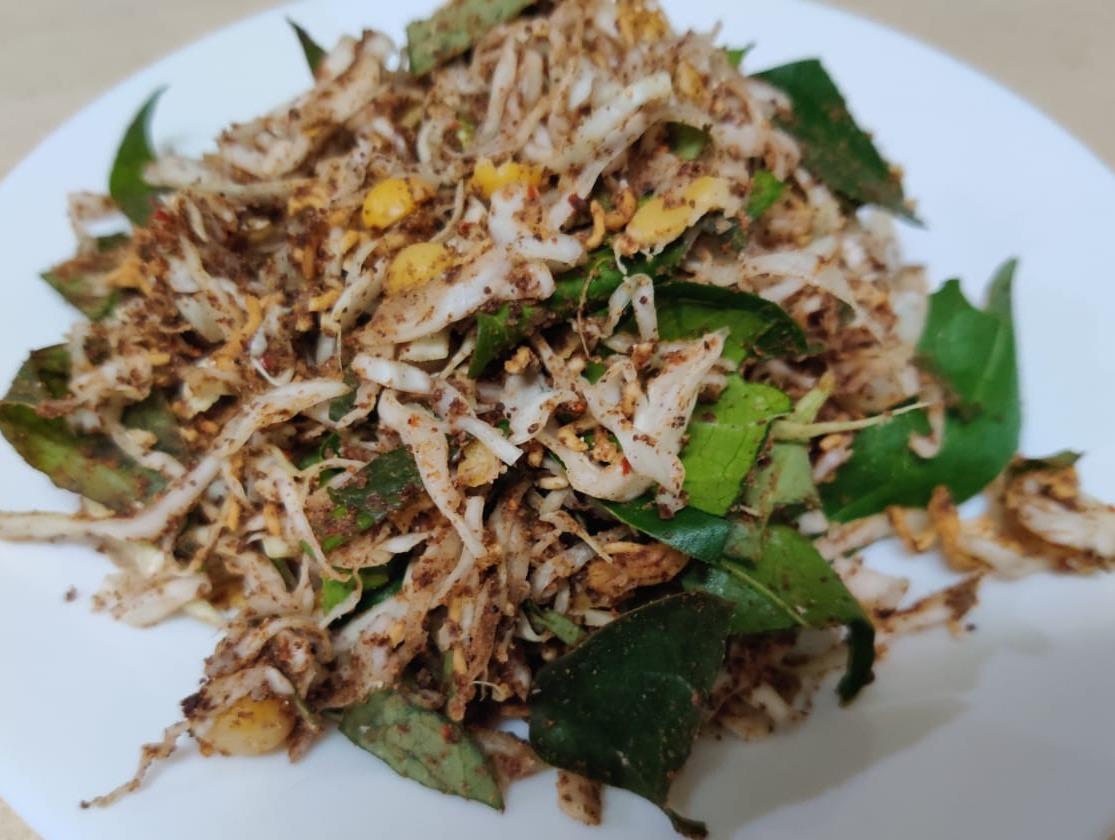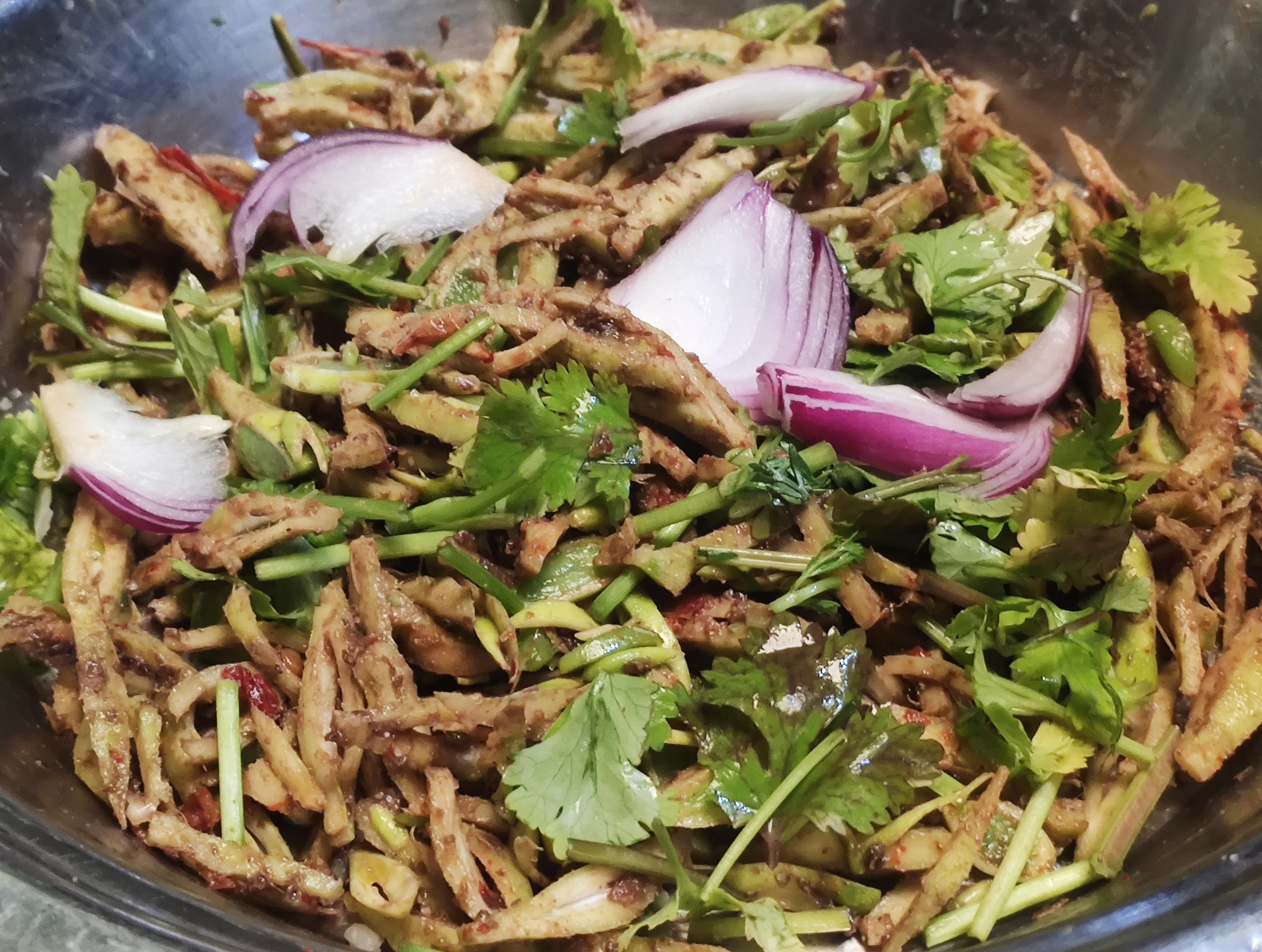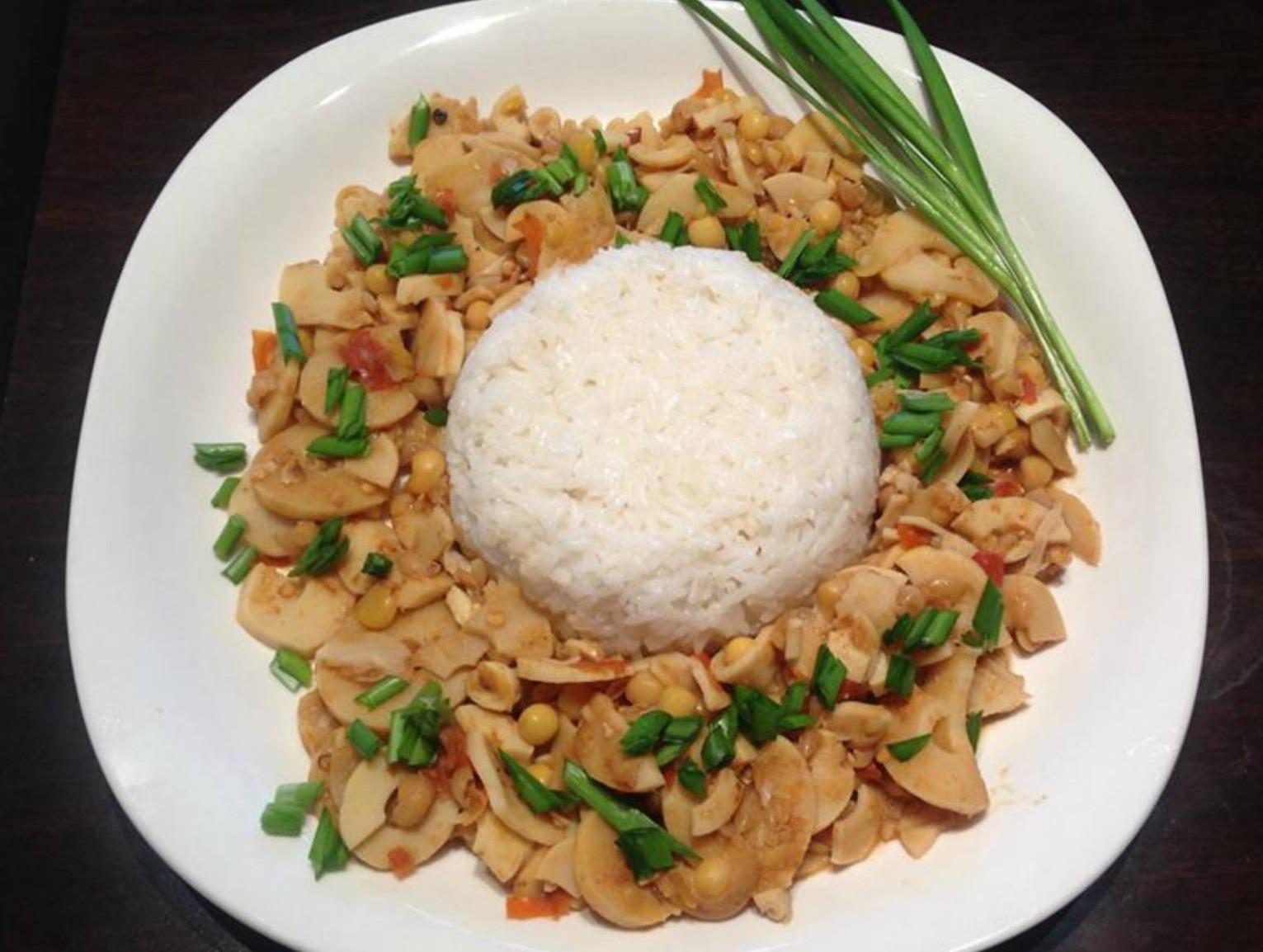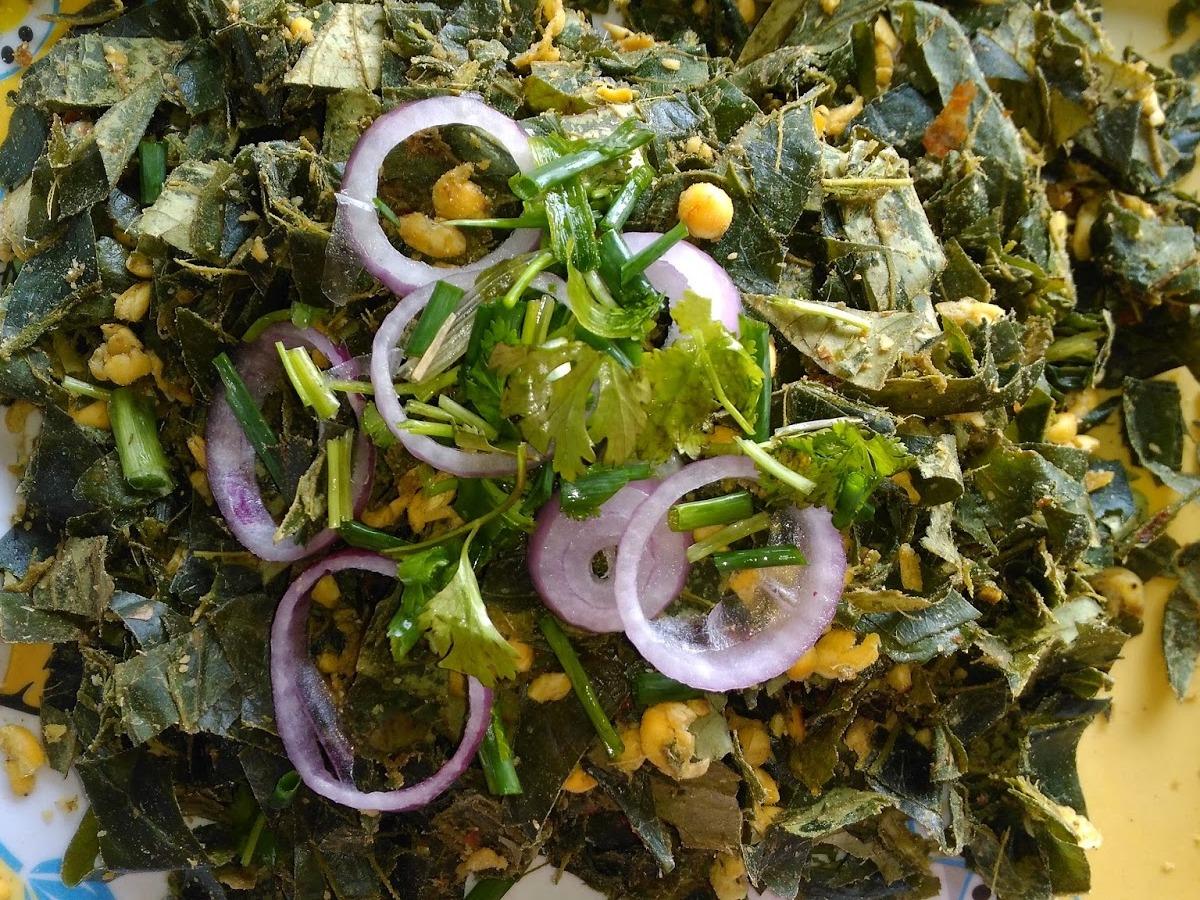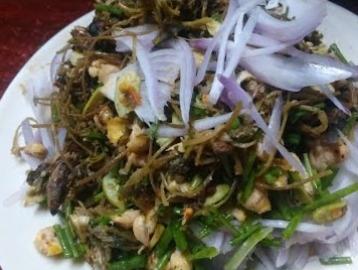
Peruk Kangsu is a traditional Manipuri dish prepared with boiled pennywort (Peruk) and soaked roasted peas. Pennywort is a perennial creeping plant found along marshes, ponds, and wetlands, belonging to the Apiaceae family. Locally known as Peruk in Manipuri, this herb is widely available across the state and is highly regarded for its medicinal properties.
Peruk is valued not only as a culinary ingredient but also as a healing herb. Rich in nutrients, it is believed to support digestion, boost immunity, and promote overall wellness. In Manipur, pennywort is consumed in multiple forms—raw as a salad, boiled with vegetables as Champhut, mashed into Eronba, or prepared dry as Kangsu. Its versatility and abundance make it a staple in local kitchens.
The word Kangsu literally means “prepared dryly,” referring to dishes made without gravy or excess water. It is closely related to Singju, another popular Manipuri salad, but with one key difference: in Kangsu, the vegetables are cooked, while in Singju they are served raw. This subtle distinction gives Kangsu a softer texture and a deeper, earthy flavor.
In Peruk Kangsu, boiled pennywort leaves are combined with soaked roasted peas, chilies, and salt, creating a dish that is simple yet nourishing. Its clean taste, medicinal value, and cultural significance make it a favorite among Manipuris, especially during seasonal meals and family gatherings.
|
2 handful -
Pennywort (peruk)
|
||
|
1 cup -
Soaked pea
|
||
|
5-6 pieces -
Red Chili
|
||
|
as required -
Salt
|
||
|
1/2 cup chopped -
Coriander leaves
|
||
|
1 piece sliced -
Spring Onion
|
||
|
5-6 pieces -
Ngari (fermented fish)
Roasted or steamed |
||
|
2-3 thumb sized pieces -
Dry / smoked fish
burn slightly for the smell and taste |
||
|
1/2 cup chopped -
Houttuynia cordata (Tokningkhok)
|
Did you try this recipe? Then please do snap a picture and share it in Instagram with #lukthel.
If you liked this recipe, please do say few words in the below comment box and rate it.