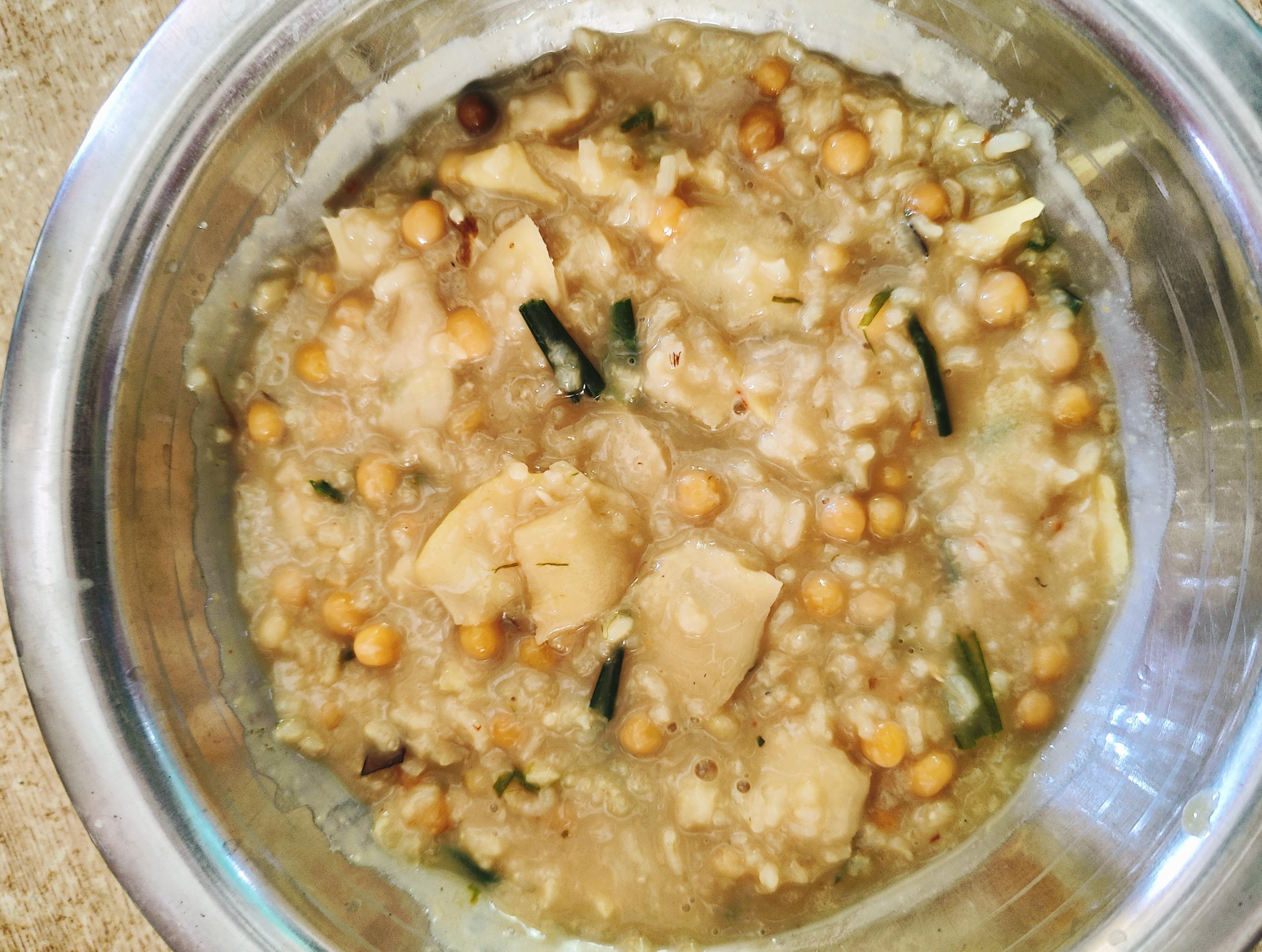
Uti Thongba is one of the most cherished vegetarian dishes of Manipur. Simple yet deeply flavorful, it holds a special place in the hearts of the Meitei people and is considered a compulsory dish in grand feasts and community gatherings. Its popularity comes not only from its taste but also from its cultural significance—Uti is a dish that symbolizes togetherness, tradition, and the comfort of home-cooked food.
There are many variations of Uti, each shaped by local ingredients and family traditions. Some of the well-known types include Usoi Uti, prepared with bamboo shoots; Mangan Uti, made with green peas; and other seasonal adaptations that highlight the diversity of Manipuri cuisine. Each version carries its own charm, but all share the same essence: a wholesome vegetarian curry that is mild, nourishing, and deeply satisfying.
For this recipe, we focus on Usoi Uti, the bamboo shoot version of Uti Thongba. Bamboo shoots, known locally as soi, are a treasured ingredient in Manipuri kitchens. Their crisp texture and earthy flavor give the curry a distinctive character, making it stand out among other vegetarian dishes. When combined with lentils or peas, fresh herbs, and a touch of mustard oil, the bamboo shoots create a curry that is both light and hearty.
Usoi Uti is often prepared during grand feasts, weddings, and festivals, where vegetarian dishes are served alongside fish and meat curries. Its presence is almost symbolic—it balances the richness of other dishes and ensures that every guest, regardless of dietary preference, finds something comforting on the table.
Unlike heavily spiced curries, Uti Thongba is known for its gentle flavor profile. It does not rely on complex masala blends; instead, it celebrates the natural taste of vegetables and legumes. The bamboo shoots add a subtle tang, while the lentils provide creaminess. A few green chilies may be added for mild heat, but overall, the dish remains soothing and easy on the palate.
This simplicity is what makes Uti Thongba so beloved. It is a dish that can be enjoyed by all ages, from children to elders, and it pairs beautifully with rice, the staple of Manipuri meals.
Whether it is a Ningol Chak Kouba feast, a community Luk Katpa gathering, or a family celebration, Uti Thongba is always present. Its versatility allows it to be cooked in large quantities without losing flavor, making it ideal for events where food is shared among many. Guests often look forward to it, knowing that Uti brings a sense of comfort and balance to the feast.
Uti Thongba endures because it embodies the values of Manipuri cooking: simplicity, respect for ingredients, and communal joy. It is a dish that proves vegetarian food can be just as rich in flavor and meaning as any meat-based curry. With its variations like Usoi Uti, it continues to evolve while staying true to its roots.
Whether served at a festival or cooked at home for a quiet family meal, Uti Thongba remains a favorite—a dish that nourishes the body and connects the soul to tradition.
|
1/2 teaspoon -
Sodium bicarbonate/cooking soda
Preferably filtered water by ashes of pea plants or rice plants (ancient method) - 1/2 liter |
||
|
10-15 pieces, sliced -
Red/green chilles
|
||
|
1/2 cup, chopped -
Chives or spring onion leaves
|
||
|
1/4 cup -
Rice
|
||
|
1 cup, thin sliced -
Bamboo shoot
|
||
|
2 -
Bay leaves
|
||
|
1 piece, medium sliced -
Onion
|
||
|
To taste -
Salt
|
||
|
2 & 1/2 cups -
Soaked white dried peas
|
||
|
5-6 teaspoon -
Oil
|
||
|
1/2 teaspoon -
Cumin seed powder
|
Did you try this recipe? Then please do snap a picture and share it in Instagram with #lukthel.
If you liked this recipe, please do say few words in the below comment box and rate it.