
 Mathou Khangembam
In this post, we explore some iconic vegetarian dishes from Manipur that are perfect for anyone looking to embrace plant-based eating while enjoying delicious flavors. Whether you’re a seasoned vegetarian or simply looking to incorporate more vegetables into your diet, these traditional Manipuri vegetarian dishes will inspire you to explore new culinary horizons.
Iconic Vegetarian Dishes from Manipur
1. Kangshoi – Healthy Vegetable Stew
Kangshoi is a quintessential Manipuri vegetable stew known for its simplicity and depth of flavor. This dish typically features seasonal vegetables such as mustard greens, radish leaves, and tomatoes simmered in water with minimal spices—allowing the natural flavors to shine through.
Actionable Insight: To prepare Kangshoi at home, start by boiling ginger, onion before adding your choice of vegetables. Add water to cover the veggies and let them slow-cook until tender. Season with salt to taste.
This healthy Manipuri vegetable stew is rich in vitamins and minerals, making it an excellent addition to any plant-based meal plan.
2. Singju – Vegetable Mix Salad with a Twist
Singju is not just any salad; it's a vibrant mix that celebrates local produce. Often made with ingredients like lotus stems, cabbage, and various herbs tossed together, this dish offers a delightful crunch alongside complex flavors.
Example: Try incorporating chickpea flour dumplings for added protein or serve it as an accompaniment to rice dishes.
3. Ooti – Yellow Peas with Indigenous Vegetables
Ooti / Uti is another staple in Manipuri households—a hearty dish made from yellow peas cooked alongside indigenous vegetables like bamboo shoots or pumpkin leaves. The slow-cooking method allows the peas to absorb all the flavors from the vegetables while retaining their texture.
Tip: Serve Ooti hot with steamed rice or flatbreads for a complete meal rich in protein and fiber.
4. Chana Kanghou – Dry Chickpea Fry
Chana Kanghou is a dry fry made primarily from roasted chickpeas seasoned with spices like turmeric and red chili powder. This dish serves as an excellent snack option or can be paired with rice for added texture.
Cooking Insight: To make Chana Kanghou even more flavorful, consider adding freshly chopped green chilies or coriander leaves right before serving.
5. Chak Hao Kheer – Black Rice Pudding (Vegetarian Dessert)
No exploration of Manipuri cuisine would be complete without mentioning Chak Hao Kheer—a decadent dessert made using black rice known for its unique nutty flavor and nutritional benefits. This slow-cooked dessert combines black rice with milk and jaggery for sweetness while garnishing it with nuts adds texture.
Health Angle: Black rice contains antioxidants that offer various health benefits including improved heart health—making Chak Hao Kheer not just indulgent but also nourishing!
6. Eromba - Hearty Vegetable Mashed Stew
Eronba (or Eromba), a classic Manipuri mashed vegetable dish often prepared with boiled potatoes, fermented bamboo shoots, and chili, Eromba isn't just a dish; it's a bowl of warmth, a taste of home during the winter chill. It is one of the simplest cuisines in Manipur, yet it is spicy because chilli is one of its major ingredients. It contains no masala. Among the local people, Eromba is a favourite because of its simple, great taste. And for this reason the cuisine has become integrated throughout the sibling communities of the state and the neighbouring states of North-East India. Eromba can be prepared with any compatible, seasonal vegetables and hence, can vary across regions and seasons. Some of them are Soibum Eronba, Pan Eronba, Yongchak Eronba, Yendang Eronba, Lafu Eronba etc.
Health Angle: Eronba is considered a gut-friendly, fiber-rich food that supports digestion and provides plant-based energy without heavy oils or animal fats.
Before potatoes were introduced, what was the main ingredient traditionally used in Eromba?
In the earliest days, Eronba (Eromba) was prepared Eromba with Chakhawai/Chakwai (Rice bean – Vigna umbellata), Heikrak (Water chestnut or water caltrop), Yendem Maru (Indo-Malayan Taro, Giant Taro, or Elephant Ear root) and Pan (Taro root). These native crops were boiled, mashed, and blended with fiery chilies and fermented fish (Ngari), creating a dish that was both nutrient-rich and deeply tied to Manipuri food culture.
What would a purely traditional Eromba look like without potatoes?
A purely traditional Eromba looked like a rustic mash of these native ingredients, boiled and blended with fiery chilies and fermented fish (Ngari), creating a dish that was both fiber-rich, seasonal, and deeply rooted in indigenous food culture. Potatoes later became a convenient shorthand, but the soul of Eromba lies in its local crops and earthy flavors.
7. Chagem Pomba - Rice grain blend with vegetables
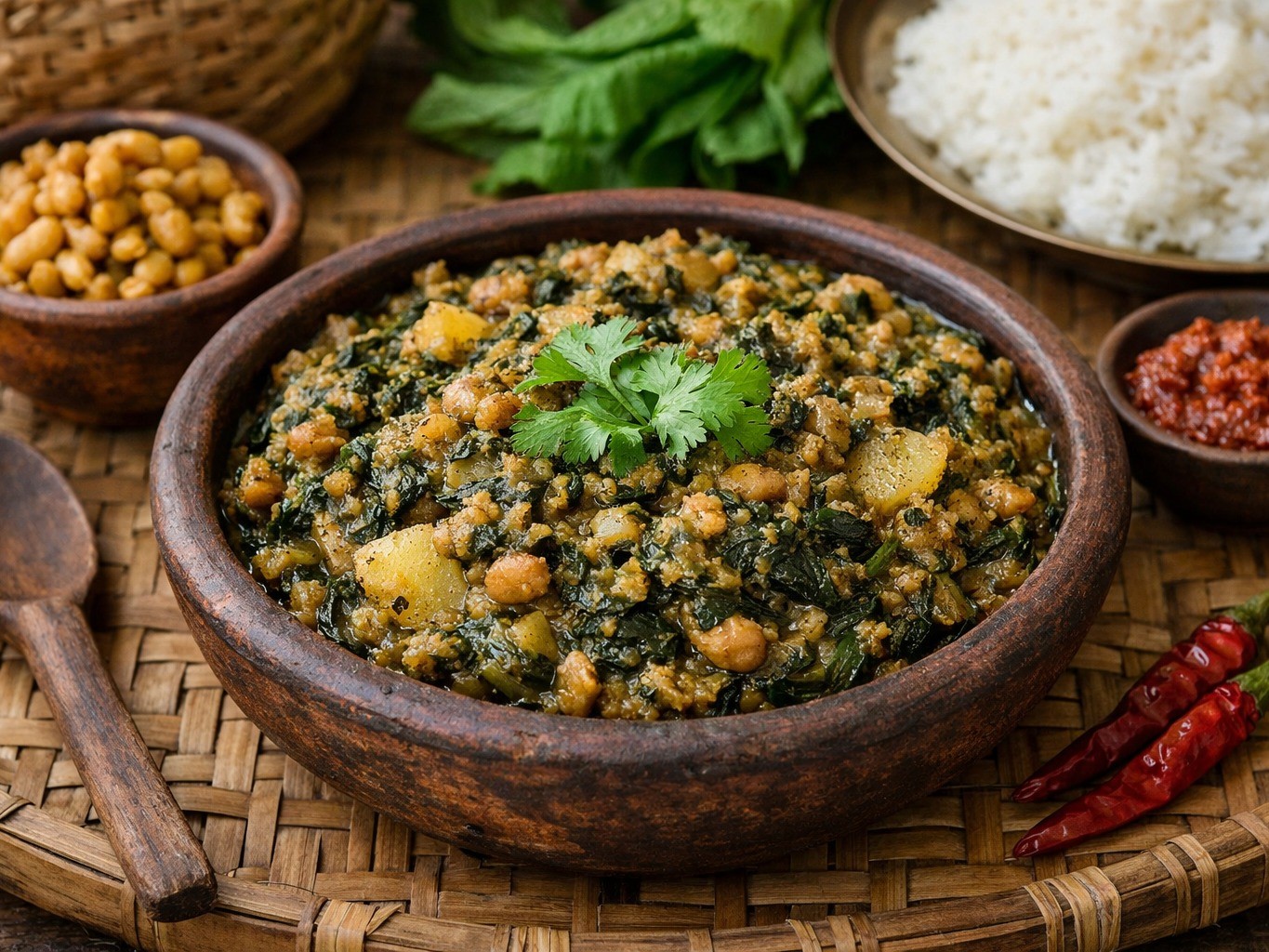
Chagem Pomba is a wholesome Manipuri dish made by simmering fermented soya beans with rice grain, seasonal greens, creating a rich, earthy flavor that is both protein-packed and deeply rooted in local culinary tradition. It’s often enjoyed with rice, offering a balanced vegetarian meal that highlights the region’s love for fermentation and natural ingredients.
Tip: To mellow the strong aroma of fermented soya beans, add a handful of fresh herbs like coriander or dill leaves at the end of cooking—this enhances freshness while keeping the dish light and digestible.
Ingredient Spotlight: Unique Local Produce
Manipuri cuisine utilizes unique ingredients that reflect its local agriculture:
- Lotus Stems: Crunchy yet tender when cooked; they add texture to salads like Singju.
- Mustard Greens: Often featured in stews like Kangshoi; they provide essential vitamins.
- Black Rice: A superfood celebrated for its antioxidant properties; perfect for desserts.
- Bamboo Shoots: Used extensively in various dishes; they add earthy undertones when cooked slowly.
- Rice Grain: The aromatic and rich blend of rice with ingredients in the dish is what makes it a very unique and popular.
- Ngari (Fermented Fish): The soul of Manipuri cuisine; adds deep umami flavor to dishes like Eromba and Morok Metpa.
- Hawaijar (Fermented Soybeans): A protein-rich staple; enhances curries and chutneys with its pungent, earthy taste.
These ingredients not only enhance flavor but also pack numerous health benefits—perfect for anyone seeking nutrient-rich options in their diet!
Traditional Cooking Styles: Embracing Slow-Cooked Flavors
One key aspect of Manipuri cuisine is its focus on slow-cooked methods which allow flavors to develop fully over time. Techniques such as fermenting soya beans create complex tastes found in dishes like Chagem Pomba while simple stews simmer gently on low heat bring out the best qualities of each ingredient used.
The aromas wafting through your kitchen—like those of mustard oil sautéed alongside fresh herbs—will transport you straight into the heart of Manipur's culinary culture!
Conclusion: Embrace Plant-Based Northeast Indian Cuisine
Vegetarian Manipuri recipes offer an exciting glimpse into how ancient traditions can meet modern dietary preferences without sacrificing flavor or nutrition. From hearty stews packed full of local greens to delectable desserts crafted using black rice—the offerings are diverse yet unifying in their celebration of wholesome ingredients sourced directly from nature.
If you're looking to expand your culinary repertoire or simply want healthier options suited for today’s lifestyle choices, these traditional Manipuri vegetarian dishes will undoubtedly satisfy both your palate and nutritional needs!
Call-to-Action
Ready to embark on your journey through the world of Vegetarian Manipuri Recipes? Start by trying out one—or all—of these delectable dishes today! Share your cooking experiences on social media using #ManipuriCuisine #Lukthel or tag us as you explore new plant-based recipes that honor tradition while promoting health!


Leave a Comment